
The Bloom — Eastern Prickly Pear Flowers and Specialist Bees on Cape Cod
June – July · Cape Cod
The Bloom.
One day. One flower. An entire ecosystem depending on it.
The most fleeting flower on the Cape
Each flower opens at dawn and closes forever by dusk.
Eastern prickly pear blooms in June and July. The flowers are brilliant yellow — sometimes with a red or orange center — and they are among the most striking wildflowers in the Cape Cod landscape. They're also among the most fleeting.
Each flower opens once, for a single day, then closes and never opens again. If you want to see it, you have to show up. That's part of what makes finding one feel like a gift.
A healthy colony can produce dozens of flowers over the course of the season — each one a brief, brilliant event. Follow @capecodcactus during bloom season and we'll tell you when and where to look.
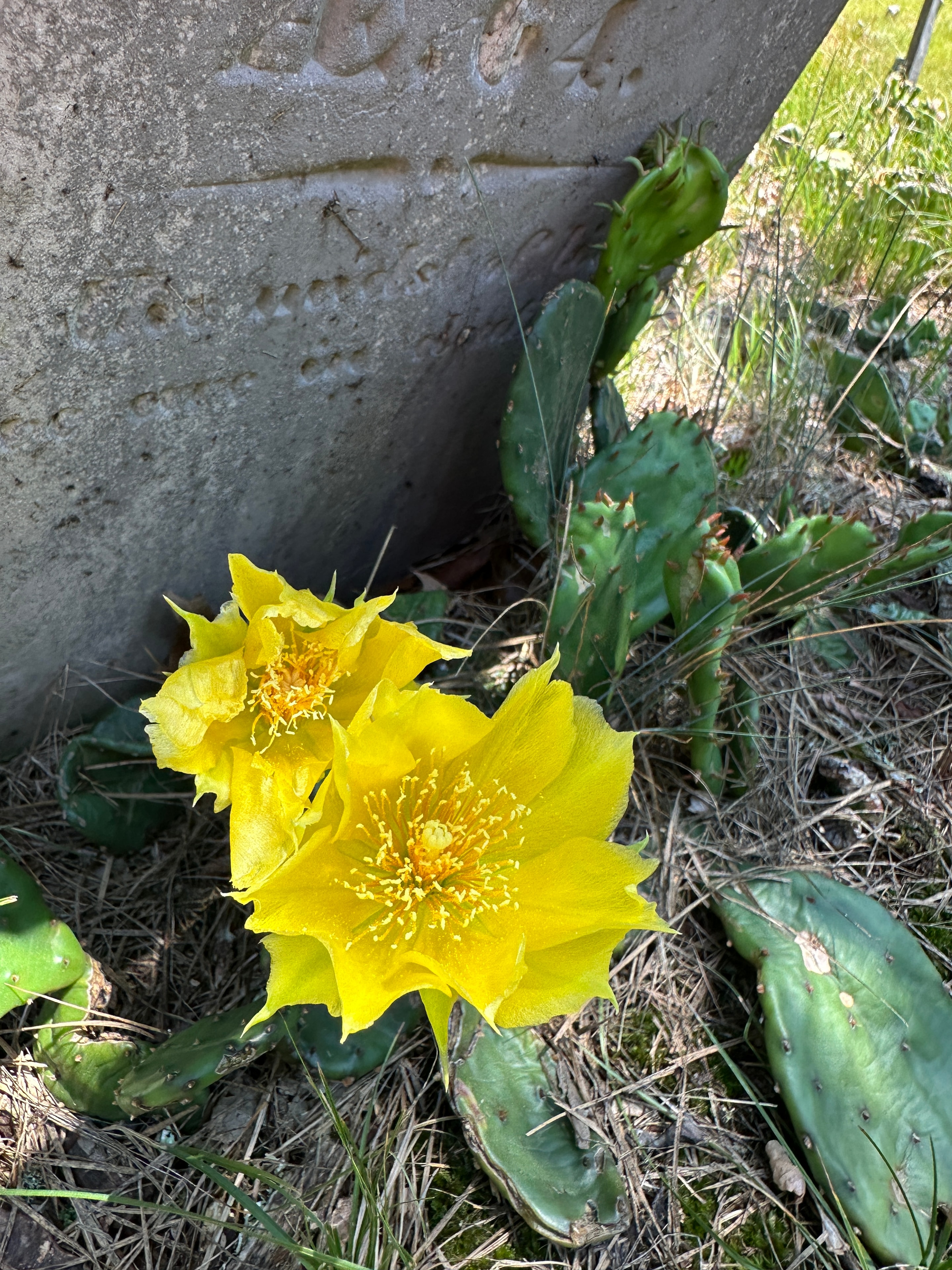
In bloom — Cape Cod, June
The bees that depend on it
When you save the flower, you save the bee.
The bloom isn't just beautiful. It's a lifeline for a community of native pollinators — including specialist bees that have evolved to depend on prickly pear and almost nothing else.
Oligolege specialists
Diadasia & Lithurgus
These native bees are oligoleges — they collect pollen from prickly pear cactus and almost nothing else. Their entire reproductive cycle is timed to the bloom. No prickly pear, no bees. It's that simple.
Ground-nesting in sandy soil
Cactus-specialist bees are solitary and ground-nesting. Each female digs a nest several inches into sandy, well-drained soil — exactly the habitat Cape Cod's dunes and sandplains provide. The plant and the bees evolved together in the same ground.
Touch-sensitive anthers
Thigmotactic — documented by Darwin
Prickly pear flowers have a remarkable trick: their anthers are thigmotactic — touch-sensitive. When a bee lands and brushes against them, the stamens curl inward and dust the visitor with pollen. Charles Darwin documented this behavior in detail. You can see it yourself on any open bloom in June.
A full pollinator community
Beyond the specialists: bumblebees, eastern carpenter bees, digger bees, leaf-cutting bees, green metallic sweat bees, and plasterer bees all feed on prickly pear flowers. A single colony in full bloom is a hub of native pollinator activity.
"When a population of prickly pear is mowed down, we don't just lose a plant. We may lose the only viable habitat for ground-nesting specialist bees on the Outer Cape."
When to look
Bloom calendar
Early June
Buds forming
Tight yellow-green buds appear on the pad edges. The plant is getting ready. Check your known colonies daily.
Mid June – July
Peak bloom
Full bloom. Flowers open at dawn, close by dusk. Each lasts one day. A healthy colony may have dozens open at once. This is the window.
Late July – August
Fruit forming
Flowers give way to deep red tunas. The fruit ripens through late summer and into fall — edible, sweet, and rich in antioxidants.
Eastham, MA
Sunset at Rock Harbor Beach, Eastham
Photo: Jack Garvey
Seen a bloom? Tell us.
Every sighting — bloom or not — helps us map surviving populations and protect them. Log it on iNaturalist, tag us on Instagram, or report it directly.