Opuntia humifusa · endangered
A cactus that belongs here.
Native for 10,000 years. Endangered today.
Here's what happened — and what we're doing about it.
Cemetery sighting — Wellfleet, MA
Photo: Jack Garvey
Roadside colony — Outer Cape
Photo: Jack Garvey
The Plant
Eastern Prickly Pear
Opuntia humifusa is a cold-hardy native cactus — genuinely native to Cape Cod. It thrives in sandy soil and full sun, flowers brilliant yellow in early summer, and produces red fruits in fall.
It is listed as endangered in Massachusetts — one of the rarest plants in the state, surviving in scattered remnant populations across the Outer Cape.
The pads are covered in tiny hair-like bristles called glochids — treat them with respect. Low-growing and flat, it's easy to overlook until you know what you're looking for.
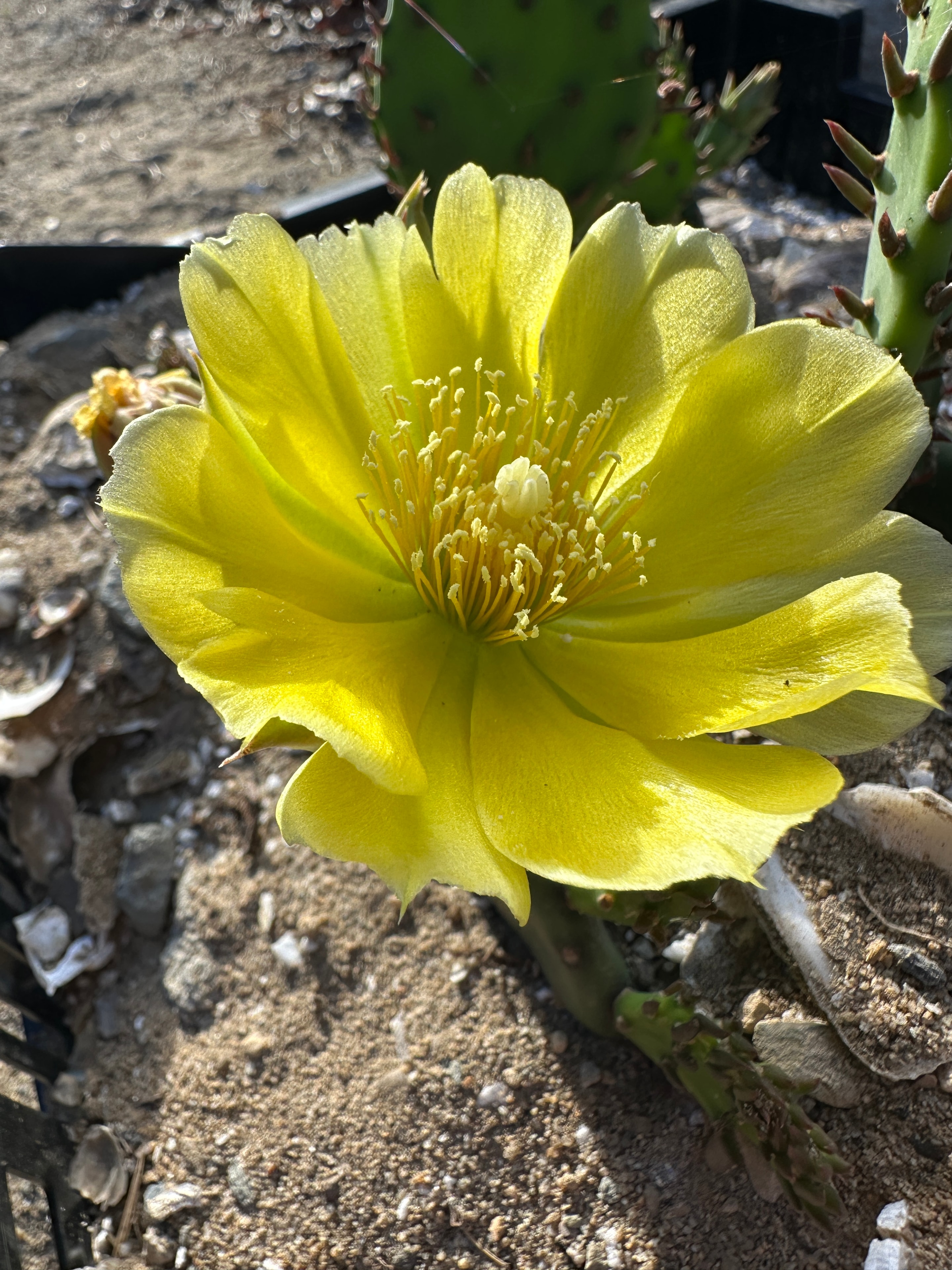
Photo: Jack Garvey
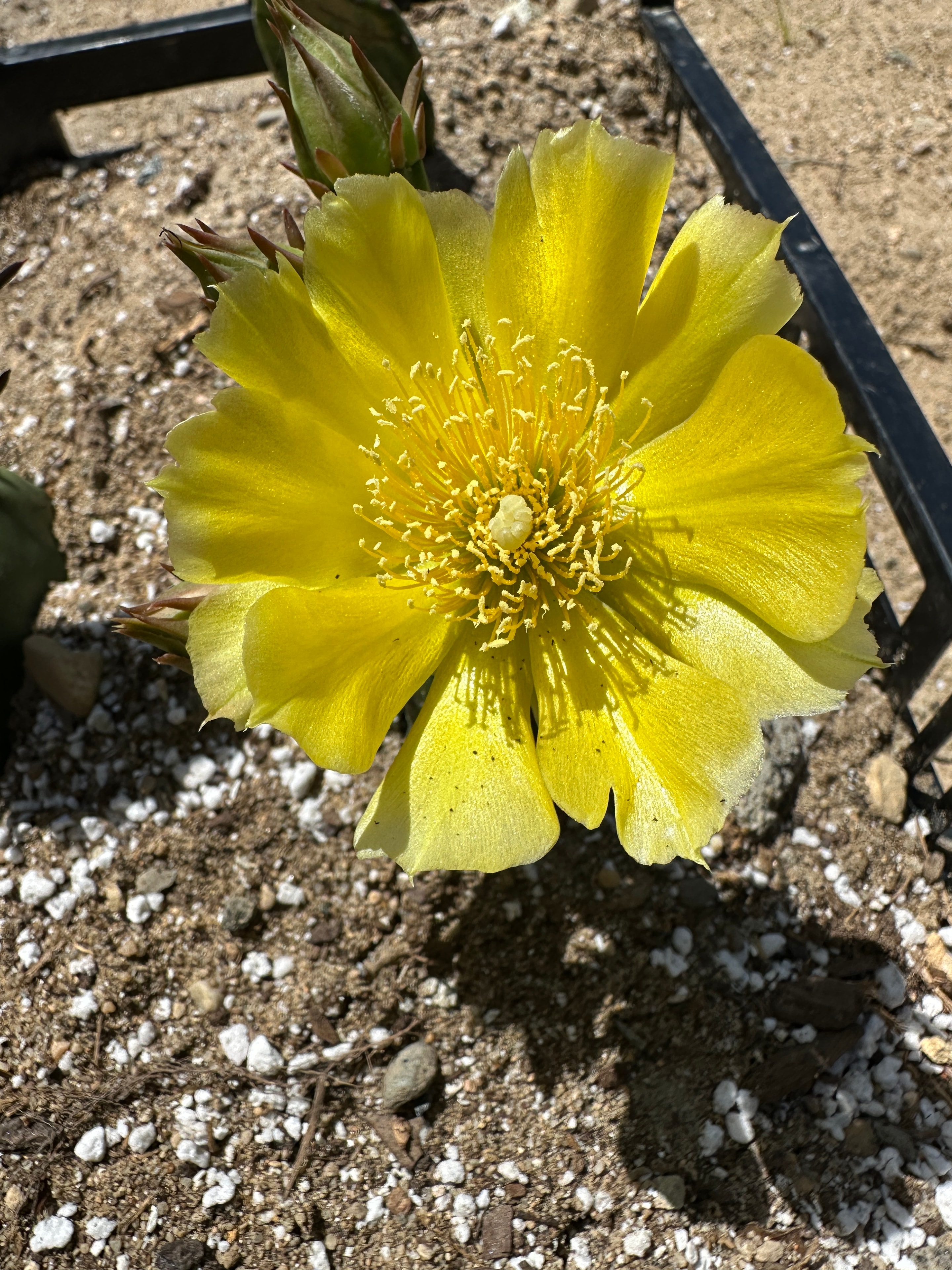
Cape Cod, June · Photo: Jack Garvey
Opuntia humifusa in bloom, Cape Cod, MA — June 2026 · Photos: Jack Garvey
Know the Difference
Meet the Cousins
People think a cactus is a cactus. Cape Cod's little native and its big western cousin are worlds apart — and the big one helps save the little one.
The Little East Coast Cousin
Eastern Prickly Pear
Opuntia humifusa
- Small & sprawling — under 1.5 ft
- Mostly spineless — tiny glochids
- Pure yellow flowers
- Survives −30°F
- Endangered in Massachusetts
The Big West Coast Cousin
Western Prickly Pear
desert Opuntia
- A giant — up to 11 ft tall
- Long, tough spines
- Sweet magenta fruit — syrups & margaritas
- Thrives in desert heat
- Abundant across the Southwest
Same family, totally different lives.
The big western cousin is thriving and sustainable to harvest — so we put it to work. A portion of every western prickly pear product we sell helps rescue its little endangered cousin back East. 🌵
10,000 years of history
This plant has been here longer than the Cape has had a name.
Eastern prickly pear has grown in Cape Cod's open, sandy sandplains and dunes for thousands of years — part of a landscape long shaped by the Wampanoag people, whose homeland includes Cape Cod, Martha's Vineyard, and Nantucket.
A landscape shaped by fire
For generations, the Wampanoag used controlled burning to manage these lands. Archaeological evidence from Barnstable — charcoal and pollen in pond sediments — confirms these periodic burns. Fire kept the sandplains open and sunny: exactly the conditions this sun-loving cactus needs.
Confirmed by charcoal in Barnstable pond sediments
Then the landscape changed
When European settlement ended those burning practices, fire suppression let woody plants take over. Pitch pine and scrub oak crept in, shading the open ground. The sun-loving prickly pear retreated.
Today, development is the bigger threat
Cape Cod's rare sandplain habitat is vanishing — driven by residential development, fire suppression, and the spread of woody and invasive plants. What little prickly pear remains clings to roadsides, cemeteries, and trail edges, often mowed by people who don't know what they're looking at.
Vanishing to residential development + fire suppression
Restoring this plant means restoring a piece of a much older relationship between people and this place. We're committed to honoring that history and building respectful relationships with Wampanoag communities as this work grows.
Sources: NPS Cape Cod fire management · Sandplain Grassland Network · MassWildlife NHESP
What We Do
Five Ways We Protect It
Document
GPS-log every wild population to build the scientific record. You can't protect what you don't know exists.
Protect
Work with landowners and towns to stop mowing, development, and neglect at known sites.
Rescue
Recover plants from development sites before they're destroyed. ~45 saved so far.
Propagate
Ethically grow rescued plants, in coordination with state wildlife officials.
Rewild
Return prickly pear to restored dune and sandplain habitat. The long-term goal.
A note on where we stand: Cape Cod Cactus is a citizen science and conservation initiative operating in active coordination with MassWildlife's Natural Heritage & Endangered Species Program (NHESP), local land trusts, and Cape Cod conservation organizations. All field work, propagation, and rewilding is conducted in compliance with Massachusetts Endangered Species Act guidelines, with proper permits and certifications pursued at every stage. Our goal is to become a recognized environmental nonprofit. In the meantime, a portion of proceeds is set aside for future rewilding efforts — pending state approval — including habitat restoration in Cape Cod's parks and dunes.
The Shop
How the Shop Funds the Work
We sell western prickly pear syrups, candles, soaps, candies, live succulents, small cacti, cactus garden supplies, and Cape Cod cactus art by @drxdiamond. A portion of all proceeds supports conservation directly.
We never harvest from wild or endangered populations. All live plants are ethically sourced. The products are good — the mission is the reason.
Learn More
Resources & Further Reading
FAQ